

The Rise of Mobile Apps for Small Businesses in 2026
Explore why SMEs are adopting mobile apps and how they boost business in 2026
Solve With Software
TL;DR
Local businesses increasingly use mobile apps to enhance customer engagement and retention. Modern app development frameworks like Flutter allow SMEs to create cost-effective, cross-platform apps. This trend helps businesses maintain direct communication with customers, boosting loyalty and sales.
Key Takeaways
- •Mobile apps improve customer retention.
- •Push notifications enhance direct communication.
- •Cross-platform development reduces costs.
- •Apps provide a competitive edge over social media.
- •Integrated app and website solutions streamline operations.
In 2026, the cost of a mobile app is now affordable for SMEs. A website used to be the gold standard. Now, people use AI, such as Google Gemini and ChatGPT, to find information, and if you are lucky, they will cite content from your website. You can take control back with a mobile app and put your business straight into people's pockets!
We're seeing more SMEs invest in their own mobile apps in 2025 and many more in 2026 because the prices are more compeititve than ever before! The businesses getting the best results are the ones putting themselves directly into their customers' pockets.
This article breaks down what a mobile app can actually do for your business, how modern app development works, and what's involved in getting from idea to the App Store.
What Can a Mobile App Actually Do for Your Business?
Let's start with the obvious: your app lives on your customer's phone. That's prime real estate. Every time they unlock their device, there you are.
But the real value is often in the communication and features that make it sticky!
Push notifications work. Unlike emails that sit unopened or social posts lost in the algorithm, a well-timed push notification lands directly on someone's screen. Flash sale starting? Appointment reminder? New stock arrived? Your message gets seen.
Loyalty becomes frictionless. Paper stamp cards get lost. Apps don't. You can reward repeat customers automatically, track their preferences, and give them reasons to come back without them having to remember anything.
You're not competing with your competitors on someone else's platform. On Google, you're one of ten results. On Instagram, you're fighting the algorithm. In your own app, you have your customer's undivided attention.
The local businesses seeing the strongest results tend to be those with repeat customers: cafés, gyms, salons, local retailers, takeaways, service providers such as accountants and law firms. If your model relies on one-off transactions with tourists, an app probably isn't your priority. But if customer retention matters to your bottom line, this is worth serious consideration.
One App, Two Platforms: How Modern App Development Works
Here's a question we get asked: "Do I need to pay for an iPhone app and an Android app separately?"
The short answer: no.
Modern development frameworks allow us to build a single app that runs natively on both iOS and Android. We use Flutter, Google's toolkit for cross-platform development. It compiles to native code, which means your app performs like it was built specifically for each platform, because, technically, it was.
What this means for you:
- Lower costs. One codebase instead of two. One development process instead of running parallel projects.
- Faster delivery. Changes and updates happen once and deploy everywhere.
- Consistent experience. Your customers get the same quality whether they're on an iPhone or a Samsung.
This isn't a compromise. The apps you use daily, from banking to food delivery, increasingly use this approach. For local businesses, it makes professional-grade mobile apps financially realistic in a way that wasn't possible five years ago.
The Building Blocks of a Professional Business App
A mobile app is only as good as the technology behind it. Cut corners here, and you'll pay for it in crashes, security issues, and frustrated customers.
We use a proven stack of enterprise-grade tools, each chosen for reliability, scalability, and long-term support.
Supabase handles your data and user accounts. It's a secure, scalable database platform that manages everything from customer profiles to order histories. Crucially, it handles authentication correctly, so your users' data stays protected and you stay compliant with data protection requirements.
OneSignal powers your push notifications. This isn't just about sending messages; it's about sending the right messages to the right people. Segment your audience. Schedule campaigns. Track what's actually getting opened. This is where many businesses see the fastest return on their app investment.
Firebase provides analytics and performance monitoring. You'll know exactly how people use your app, where they drop off, and what features they love. Data-driven decisions, not guesswork.
RevenueCat manages subscriptions and in-app purchases. If your business model includes memberships, premium tiers, or paid content, this handles all the complexity of App Store and Google Play billing. It just works.
Why does this matter to you? Because these aren't cobbled-together solutions. They're the same tools powering apps with millions of users. Your app gets that same infrastructure, which means it scales with your business and doesn't fall over when things get busy.
Beyond the App: Your Admin Dashboard and Website
An app without a backend is like a shop without a stockroom. You need somewhere to manage things.
Every app we build comes with an admin dashboard, a secure web interface where you control everything. A place to update your data. View orders and bookings. Send push notifications. Manage customer accounts. Export data for your accountant.
One login. One system. Not five different platforms that don't talk to each other.
For many businesses, we also build the customer-facing website that connects to the same system. Your app and your website share the same database, the same products, the same customer accounts. Someone can browse on their laptop, then complete the purchase in your app. No friction. No duplicate data entry for you.
This integrated approach costs more upfront than bolting together separate tools. But it saves significant time and money in the long run—and the customer experience is noticeably better.
What the Process Looks Like: From Idea to App Store
Understanding the journey helps set realistic expectations. Here's how it typically works.
Discovery and Planning. We start by understanding your business, your customers, and what you actually need the app to achieve. Not every feature is worth building. We help you prioritise ruthlessly so you launch with something focused and effective.
Design. Before writing code, we design the screens and user flows. You'll see exactly what your app will look like and how it will work. Changes are easy at this stage; they're expensive later.
Development. This is where the app gets built. We work in stages, sharing progress regularly so there are no surprises. You'll have access to test versions throughout.
Testing and Refinement. We test on real devices across iOS and Android. You test with your team. We fix issues and polish the experience.
App Store Submission. Apple and Google both review apps before they go live. We handle the submission process, the screenshots, the descriptions—all of it. Apple's review can take a few days; Google is usually faster.
Total timeline: typically 8-10 weeks from kickoff to launch. Complex apps take longer. Simpler apps can be faster. We'll give you a realistic estimate once we understand the scope.
After Launch: Support, Updates, and Growth
Launching your app isn't the finish line. It's the starting line.
Apps need ongoing maintenance. Apple and Google release new operating system versions every year. Devices change. Security requirements evolve. An app that isn't maintained will eventually stop working or get removed from the stores.
We provide ongoing support packages that cover essential maintenance, minor updates, and technical troubleshooting. You're not left on your own after launch.
Beyond maintenance, the best apps evolve based on real usage. Once customers are using your app, you'll learn what they love and what's missing. The analytics tell you where people get stuck. Reviews tell you what they want next.
Building in phases often makes sense: launch with core features, then add capabilities based on actual demand rather than assumptions. This approach manages your investment and reduces risk.
Is a Mobile App Right for Your Business?
Technology is moving fast, and it's time to lock in and engage with your customers like never before!
An app makes sense if:
- You have regular, repeat customers
- Customer loyalty and retention directly impact your revenue
- You want a direct communication channel you control
- You're prepared to promote the app and encourage downloads
- You're thinking long-term, not looking for a quick fix
An app might not be the priority if:
- Your business relies mainly on one-off customers or passing trade
- You don't have the capacity to manage another channel
- Your website isn't yet delivering results (fix that first) - see our AI website platform solution.
Next Steps
If you're considering a mobile app for your business, the best starting point is a conversation. No hard sell, just an assessment of whether this makes sense for your situation.
We work with local businesses across Essex, Suffolk, London and the UK, building apps that actually deliver results. You work directly with me, Marc Allington, throughout the process, not a rotating cast of agency staff you've never met.
Get in touch to discuss your project. Let's see if we're a good fit.
Frequently Asked Questions
Is a mobile app suitable for all businesses?
Apps are ideal for businesses with repeat customers and those seeking to enhance customer engagement.
Why should local businesses invest in mobile apps?
Mobile apps enhance customer engagement, loyalty, and streamline operations, leading to increased revenue.
What are the benefits of a mobile app for a local business?
Benefits include direct communication, improved customer retention, and competitive advantage.
How does cross-platform app development work?
Using frameworks like Flutter, a single codebase runs on both iOS and Android, reducing costs and time.
What is the typical timeline for app development?
The process typically takes 12-16 weeks, from planning to app store launch.
What are the steps to launch a business app?
Key steps include planning, design, development, testing, and submission to app stores, followed by ongoing support and updates.
Why should local businesses develop mobile apps?
Mobile apps enhance customer engagement and retention, providing direct communication and loyalty benefits.
How do mobile apps benefit small businesses?
They offer direct customer interaction, improved loyalty programs, and a competitive edge over social media platforms.
What is cross-platform app development?
It's the process of creating a single app that runs on both iOS and Android, reducing development costs and time.
How do push notifications improve engagement?
They provide timely updates directly to users' screens, increasing visibility and interaction compared to emails or social posts.
About Solve With Software
Expert insights on software development, AI, and digital transformation from the Solve With Software team.
More in Mobile Apps
See all...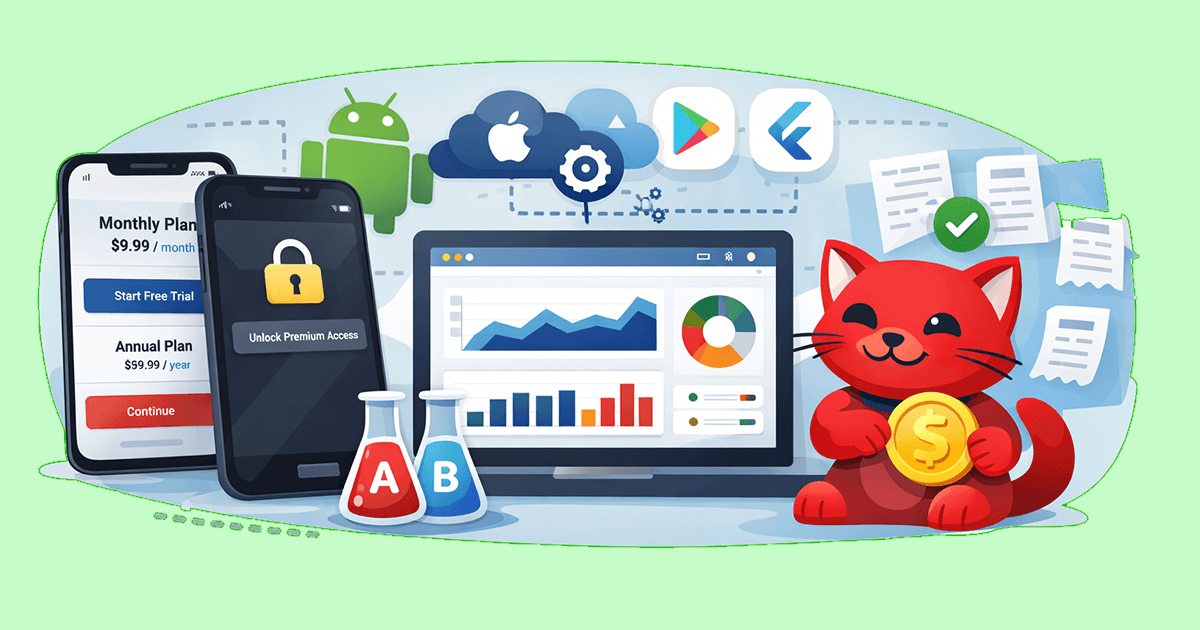
RevenueCat integration for mobile app subscriptions
RevenueCat simplifies app subscriptions across platforms. Learn how it optimises revenue and reduces churn effortlessly.
10 Reasons Why Your Business Needs a Mobile App
Learn why having a mobile app is essential for your business's growth and customer engagement. Don't miss out!

Put Your Recruitment Agency in Every Candidate's Pocket
Boost your profits with your own candidate mobile app (iOS and Android). Take our amazing offer for founder members (limited places). Talk to us today for more information.

I need a mobile app built
Mobile app development in Colchester, serving Essex, London, and East Anglia.
Deploying Your Mobile App to the App Stores
Ready to launch your app? We guide you through deploying to Apple and Google stores, from setup to ongoing releases.